The market for top duct cleaning near Winter Park FL ranges from credentialed professionals who do this work correctly to operations advertising $49 whole-house cleans that will cost you more than they save. What separates them is not always obvious from a website or a quote, but it becomes clear once you know what to ask.
Below is how to tell the difference.
TL;DR Quick Answers
top duct cleaning near Winter Park FL
The top duct cleaning services near Winter Park, FL are defined by local climate knowledge, proper equipment, and verified credentials — not by price alone. In a city where homes run their AC nine or ten months a year and lake-area humidity accelerates buildup inside ductwork, the providers who actually know this environment deliver results that out-of-area or low-bid operations cannot.
The best duct cleaning services near Winter Park, FL share these qualities:
They inspect the full HVAC system first — air handler, evaporator coil, drain pan, and all duct runs — before any cleaning begins
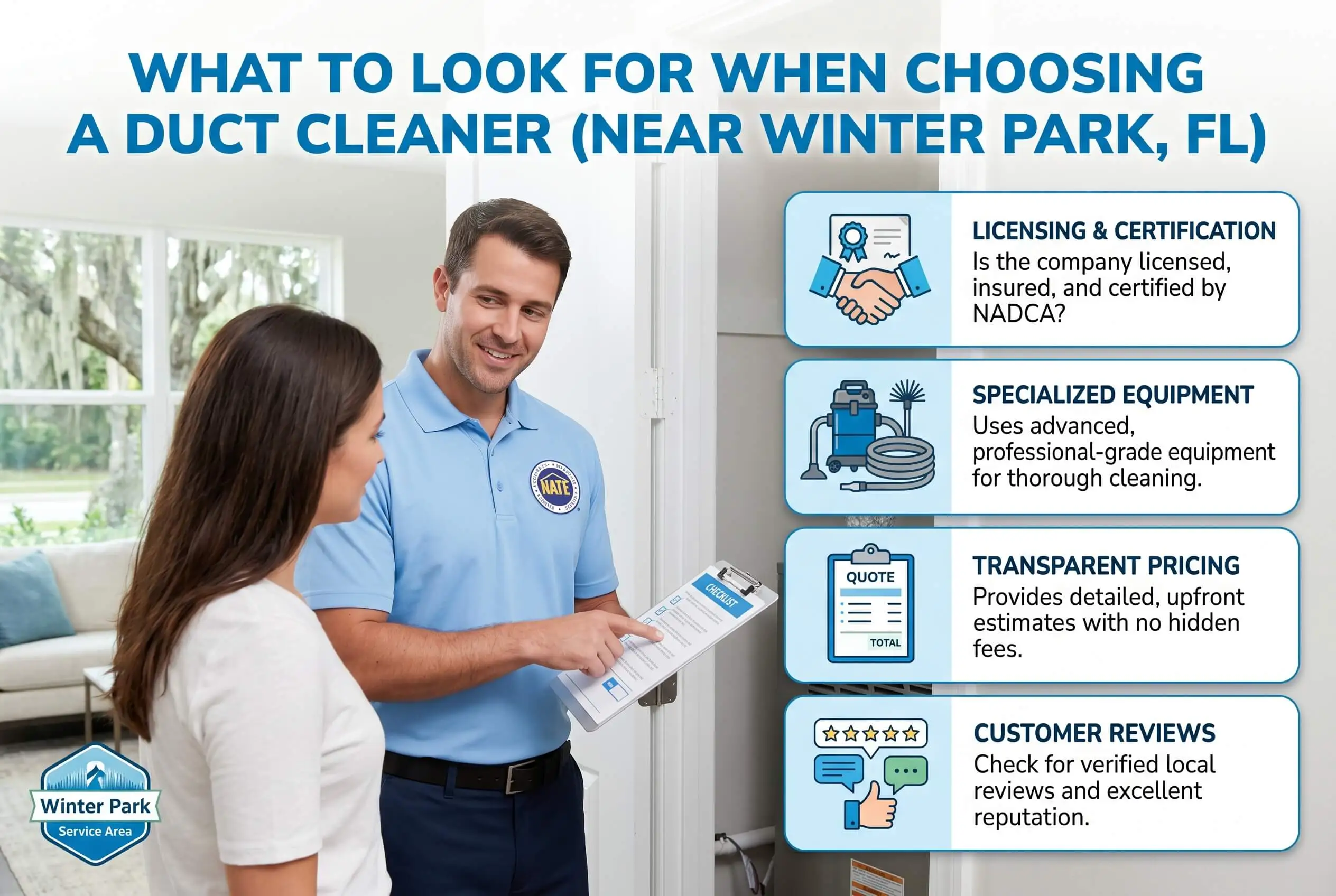
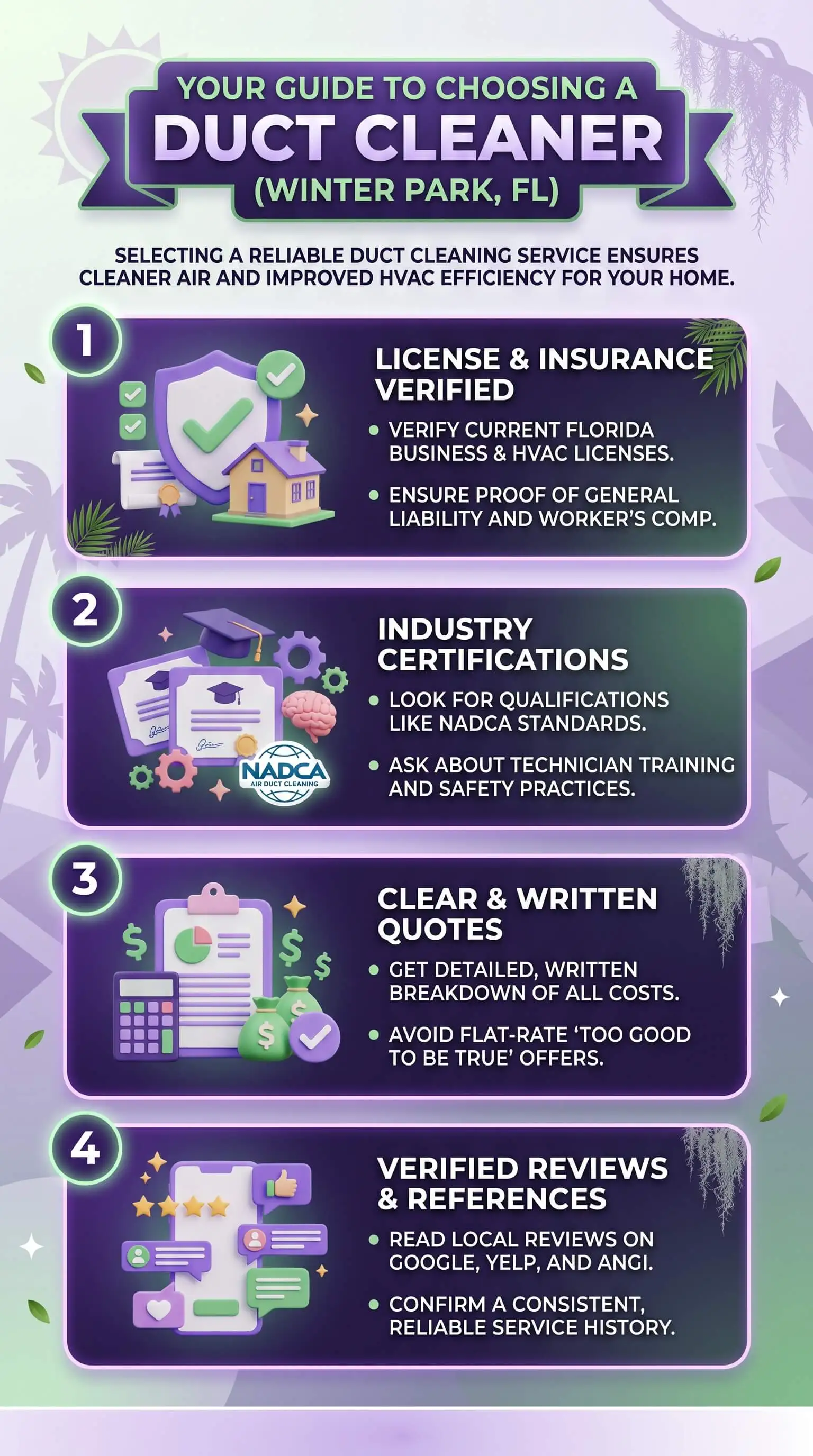
Their technicians hold NADCA membership and Certified Air System Cleaning Specialist (ASCS) credentials that are verifiable before you book
They use high-powered negative-air equipment to extract debris and exhaust it fully away from the home, not shop vacuums or light portable units
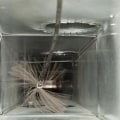
They provide before-and-after photos or camera footage of the duct interior as a standard part of every service call, not as an upgrade
They deliver a written, itemized quote that holds — whole-home duct cleaning in Winter Park typically runs $300 to $700 for a legitimate job
They carry a verified Florida contractor license and proof of liability insurance
They clean every component of the system: supply and return ducts, registers, air handler, coil, drain pan, and fan housing — not the ducts alone
Most Winter Park homes benefit from duct inspection and cleaning every three to five years, given the area's extended cooling season, oak-canopy pollen load, and persistent humidity near the city's lakes.
Top Takeaways
Local expertise is non-negotiable. A provider who understands Winter Park’s lakes, climate, and housing stock approaches your system differently than one running a generic service call.
Equipment quality determines results. Negative-air machines that exhaust fully away from your home are the professional standard. Anything less risks redistributing debris rather than removing it.
Credentials are publicly verifiable. NADCA certification, ASCS designation, and Florida contractor licensing are all confirmable before you book. Ask, and expect a direct answer.
Low advertised prices are nearly always bait. Whole-home duct cleaning in this area costs $300 to $700 for a legitimate service. Prices well below that range almost always rise significantly once a technician is in your home.
Documentation is your proof. Before-and-after photos or video of your duct interior confirm the work was done. If a company cannot provide it, the work cannot be verified.
Florida homeowners need more frequent attention. Extended AC seasons and high humidity accelerate buildup. An inspection every three to five years is a reasonable maintenance baseline for most Winter Park homes.
Complete system cleaning outperforms duct-only work. Cleaning the ducts while leaving the air handler and coil untouched guarantees that contamination returns to your duct system immediately after the job is done.
What Makes a Duct Cleaner Worth Trusting Near Winter Park
Local Climate Knowledge Matters as Much as Equipment
A company covering ten different states brings general HVAC knowledge. That knowledge does not prepare a technician for what they actually find inside a Winter Park home that has been running its AC since February. Technicians who have worked these homes know to look for moisture pockets near flex duct connections, recognize the pollen profiles Central Florida generates in spring, and understand why lake-adjacent homes accumulate condensation differently than those set further inland.
Ask any company you consider: what specific air quality issues do you see most often in Winter Park homes? A provider with real local experience answers immediately and specifically. A provider without it describes dust and debris in terms that could apply to a home anywhere in the country.
The Right Equipment for Florida Ductwork
Professional duct cleaning in a Florida home requires high-powered negative-air equipment — specifically, truck-mounted or high-capacity portable units that exhaust fully away from the occupied home. Shop vacuums don’t meet that standard. Light portable equipment doesn’t either.
Ask to see the equipment before service begins. A company offering duct cleaning near Winter Park should show you exactly what they’re using and explain why it fits your system’s configuration.
Credentials and Certification: What to Verify Before You Book
NADCA, the National Air Duct Cleaners Association, sets the professional standard for duct cleaning. Member companies employ Certified Air System Cleaning Specialists who have passed a formal examination and follow documented protocols covering every component of your HVAC system. Before booking, ask directly whether the technicians carry ASCS certification and whether the company can confirm its Florida contractor license. The right company answers both questions without hesitation.
Transparency: Scope, Pricing, and Before-and-After Documentation
Any reputable provider gives you a clear written scope of work before service begins, itemized pricing that shows what is and is not included, and before-and-after photos or video of the duct interior. That documentation proves the work was done correctly. If a company cannot provide it, or will not, remove them from your list.
Red Flags That Should Stop You From Booking
Prices Too Low to Be Legitimate
Whole-home duct cleaning in Winter Park typically runs $300 to $700 depending on system size, configuration, and condition. Prices advertised well below that range — $49, $79, or $99 for a whole-house clean — are nearly always bait-and-switch offers built to get a technician through your door. Once inside, the price rises fast through add-ons and upgraded services the homeowner feels pressured to accept on the spot.
A fair quote reflects the actual work involved. It may not be the lowest number you find, but it is the number that holds when the job is done.
No Documentation Offered
If a company cannot show you before-and-after photographs or camera footage of your ductwork, you have no way to confirm the work was done correctly. Providers who do this work well document the interior of your system before cleaning begins and again when it’s finished, as standard practice, not as an optional upgrade. Missing documentation is not a minor inconvenience. Without it, you have no way to confirm the work happened at all.
Technicians Without Verifiable Credentials
Anyone can buy a vacuum and call themselves a duct cleaner. The credentials that matter are NADCA certification, Florida contractor licensing, and verifiable proof of liability insurance — and you can confirm all three before anyone shows up. If a company resists when you ask directly, that resistance is its own answer.
High-Pressure Add-On Selling During the Job
A technician who arrives and immediately discovers you urgently need antimicrobial treatments, duct sealant coatings, or other services not in your original quote is running a pressure playbook, not a cleaning service. Some homes genuinely need more than standard cleaning. But any recommendation made under pressure, or one you’re not given time to think over, deserves a second opinion.
What the Right Duct Cleaning Actually Includes
A Full System Inspection Before Any Cleaning Begins
A professional service call starts with a walk-through of your HVAC system: the air handler, evaporator coil, drain pan, return air plenum, and accessible duct runs. That inspection tells the technician what they’re working with before any equipment is turned on. If a company skips the inspection and goes directly to cleaning, they’re working without the information they need.
Negative-Air Containment and Full Debris Capture
Proper duct cleaning places your HVAC system under negative pressure using high-powered vacuum equipment attached directly to the system. This ensures dislodged debris moves toward the vacuum, not toward your living space. Every bit of captured debris comes out of your home. Any approach that blows material around inside the ducts and tries to vacuum it afterward does not meet a professional standard.
Complete Coverage of All System Components
A thorough cleaning supports proper HVAC duct sizing by addressing every component of your heating and cooling system: supply and return ducts, all registers and grilles, the air handler, evaporator coil, drain pan, and fan housing. Cleaning the ducts while leaving the air handler and coil untouched leaves contamination in place that reintroduces itself into your duct system the moment your HVAC turns on again.
Post-Clean Verification and Documentation
Before a technician leaves your home, they should demonstrate restored airflow at each supply register, confirm all access panels are properly resealed, and hand you the before-and-after documentation. A professional company provides this as standard, not as an extra-cost line item.
How Winter Park’s Climate Affects Your Ducts Year-Round
Winter Park, Florida is a city of lakes, historic neighborhoods, and one of Orange County’s most established residential landscapes. It’s also where indoor air quality conditions build up in ways that most national duct cleaning guides simply don’t account for.
Lake-Area Humidity and Moisture Risk Inside Ductwork
Homes near Lake Virginia, Lake Sue, Lake Killarney, and the other lakes that define Winter Park’s character sit in a persistently humid environment. That ambient moisture works its way into ductwork through condensation, particularly in older systems or homes where duct insulation has degraded over time. Moisture pockets inside flex duct runs create the conditions for mold to take hold, and mold inside ductwork is not a cosmetic problem.
A quality inspection will spot those areas, tell you what’s driving the issue, and point you toward what actually needs to happen next.
Long AC Seasons and Accelerated Dust Accumulation
Running your system for nine to ten months out of the year means your air handler is circulating air through your ducts continuously for far longer than the national average assumes. That extended runtime translates directly into faster particle accumulation inside your duct system, not because the system is failing, but because it’s doing exactly what it’s supposed to do in a climate that demands constant operation.
Most Florida homeowners benefit from duct inspection and cleaning every three to five years rather than the longer intervals that apply in parts of the country with much shorter cooling seasons.
Canopy Tree Pollen and Return Air Grille Buildup
Winter Park’s mature oak and cypress canopy is one of the city’s defining features and a significant source of airborne pollen every spring bloom season. That pollen enters homes through every gap, door, and ventilation opening and builds up inside return air grilles and duct runs in concentrations that restrict airflow noticeably when left unaddressed for multiple seasons.
Older Homes and Ductwork Built Before Modern Sealing Standards
Many of Winter Park’s most established neighborhoods, including the streets surrounding the Rollins College campus, feature homes built in the 1950s through the 1970s. Ductwork installed in those decades was not built to current sealing standards. Gaps, leaks, and degraded flex duct connections allow conditioned air to escape and unconditioned attic air to enter, compounding both energy costs and contamination inside the system.
A provider who knows Winter Park’s housing stock checks for these issues during the initial inspection and gives you an honest assessment of what, if anything, needs attention beyond standard cleaning.
Other HVAC Services Available Near Winter Park
Duct cleaning is where a lot of homeowners start. Depending on what an inspection turns up, your system may need more.
If the inspection finds significant duct leakage, Aeroseal duct sealing uses a patented pressurized process to seal gaps from the inside without opening walls or ceilings. For homeowners who want to protect their systems before problems develop, seasonal AC maintenance and HVAC tune-ups keep coils clean, refrigerant levels correct, and drainage clear ahead of Florida’s demanding summer. For rooms or homes without existing ductwork, mini split installation offers a flexible, energy-efficient alternative with independent zone control. And when the overall condition of a system is uncertain, a professional HVAC inspection delivers a clear, documented picture of what you are working with before any spending decisions are made.
“The question I hear most often from Winter Park homeowners is whether they actually need duct cleaning, or whether someone is simply trying to sell them something. My honest answer, based on what I see when I open up these systems: homes near the lakes with flex duct runs that have been in service for five or more years almost always have accumulation that surprises the owner. The combination of Florida humidity, continuous AC operation, and the pollen load from the canopy here accelerates buildup well beyond what most general guidance prepares people to expect. The homes that need it most often aren’t the ones showing obvious symptoms — they’re the ones where no one has looked in a while.”
7 Essential Resources
The resources below come from federal health and environmental agencies. Each one helps Winter Park homeowners understand when duct cleaning is genuinely warranted, what professional service looks like, and what’s at stake for your family’s air.
1. EPA: Should You Have the Air Ducts in Your Home Cleaned?
Source: https://www.epa.gov/indoor-air-quality-iaq/should-you-have-air-ducts-your-home-cleaned
This is the foundational consumer guide from the U.S. Environmental Protection Agency. It explains when duct cleaning is genuinely warranted, what a qualified provider should do, and how to evaluate whether the job was completed correctly. Every homeowner evaluating duct cleaning should read it first.
2. NIH Division of Occupational Health and Safety: HVAC Duct Cleaning Fact Sheet
Source: https://ors.od.nih.gov/sr/dohs/Documents/fact-sheet-hvac-duct-cleaning.pdf
This fact sheet from the National Institutes of Health outlines professional standards for duct cleaning, including NADCA certification requirements, proper containment practices, and guidance on biocide use. It is a practical reference for verifying whether a company’s practices meet established health and safety protocols.
3. EPA: The Inside Story: A Guide to Indoor Air Quality
Source: https://www.epa.gov/indoor-air-quality-iaq/inside-story-guide-indoor-air-quality
A detailed EPA resource that explains the primary sources of indoor air pollution, how pollutants accumulate in homes, and what homeowners can do to reduce exposure. Particularly useful for understanding the relationship between HVAC system condition and overall indoor air quality.
4. American Lung Association: Clean Air Indoors
Source: https://www.lung.org/clean-air/indoor-air
The American Lung Association’s indoor air resource hub covers the health effects of poor indoor air quality, what makes indoor air unhealthy, and practical steps for protecting your family. A useful reference for connecting duct conditions to real-world respiratory health outcomes.
5. EPA: Introduction to Indoor Air Quality
Source: https://www.epa.gov/indoor-air-quality-iaq/introduction-indoor-air-quality
This EPA overview explains how indoor pollutants build up, the role of ventilation in diluting or concentrating those pollutants, and the health effects associated with prolonged indoor air exposure. It provides important context for why HVAC system maintenance, including duct cleaning when warranted, matters for household health.
6. American Lung Association: What Makes Indoor Air Unhealthy?
Source: https://www.lung.org/clean-air/indoor-air/indoor-air-pollutants
This resource identifies the specific pollutants and conditions that degrade indoor air quality, including moisture, mold, combustion byproducts, and particulate matter. It helps homeowners recognize the range of factors affecting their air and understand why ductwork can act as a reservoir for several of them.
7. EPA: Volatile Organic Compounds’ Impact on Indoor Air Quality
Source: https://www.epa.gov/indoor-air-quality-iaq/volatile-organic-compounds-impact-indoor-air-quality
Drawing on the EPA’s own TEAM study data, this resource explains how VOCs and organic chemical compounds accumulate indoors at levels consistently higher than outdoors. It supports the broader case for proactive indoor air quality management, including regular filter replacement and periodic duct inspection.
Supporting Statistics
Stat 1: Americans Spend Roughly 90 Percent of Their Time Indoors
According to the EPA, Americans spend approximately 90 percent of their time indoors, where the concentrations of some pollutants are often 2 to 5 times higher than typical outdoor concentrations.
Source: https://www.epa.gov/report-environment/indoor-air-quality
Dave’s Insight: In Winter Park homes that run the AC nearly year-round, that 90 percent figure is not an abstraction. Sealed, air-conditioned spaces with limited fresh air exchange accumulate the same pollutants that settle inside ductwork. What builds up in the air builds up in the system moving it.
Stat 2: VOC Levels Are Consistently Higher Inside Homes Than Outside
The EPA’s Total Exposure Assessment Methodology (TEAM) study found levels of about a dozen common organic pollutants to be 2 to 5 times higher inside homes than outside, and concentrations of many VOCs can reach up to ten times higher indoors than outdoors.
Source: https://www.epa.gov/indoor-air-quality-iaq/volatile-organic-compounds-impact-indoor-air-quality
Dave’s Insight: Older Winter Park homes near major roads or surrounded by thick vegetation can trap VOC-laden air inside longer than newer builds. When the duct system is pulling that air continuously through the home, the surfaces inside those ducts absorb and hold compounds that a simple filter change alone will not address.
Stat 3: Poor Indoor Air Quality Is Linked to Serious Respiratory Health Outcomes
According to the American Lung Association, poor indoor air quality can cause or contribute to the development of infections, lung cancer, and chronic lung diseases such as asthma. Young children, older adults, and people with existing lung disease are most at risk.
Source: https://www.lung.org/clean-air/indoor-air/indoor-air-pollutants
Dave’s Insight: Every home I walk into in this area has someone in it worth protecting. Families with children, older residents, neighbors managing asthma or allergies. When I see a duct system that has not been properly maintained, I think about all of them. That is why I am honest about what I find, even when the news is not what the homeowner was hoping to hear.
Final Thought & Opinion
Finding top duct cleaning near Winter Park FL comes down to one question that cuts through every advertisement and every quote: does this company actually understand what happens inside a home like mine?
The conditions in Winter Park — lake humidity, a near year-round AC season, heavy seasonal pollen, and aging ductwork in many of the city’s most established neighborhoods — push HVAC systems harder than most national guides assume. A provider who understands those factors will inspect before they clean, use appropriate equipment, document their work, and give you an honest read rather than a sales pitch.
The lowest quote is almost never the right answer, and an impressive-sounding package isn’t either. The right provider shows you what’s inside your system, tells you what it needs, and proves the work was done before they leave.
You deserve honest service from someone who knows this community. That is what we show up to provide every time.
Frequently Asked Questions
Q: What should I look for when choosing a duct cleaner near Winter Park FL?
A:
Local climate knowledge specific to Central Florida’s humidity and long AC seasons
High-powered negative-air equipment rated for residential duct systems
NADCA membership and ASCS-certified technicians
Written scope of work, itemized pricing, and before-and-after documentation provided as standard
Verifiable Florida contractor license and proof of liability insurance
Q: How often should ducts be cleaned in Winter Park?
A:
Most Winter Park homes benefit from inspection and cleaning every three to five years
Homes with pets, residents with allergies or asthma, or recent renovations may need more frequent attention
Homes near the lakes or with older ductwork should be inspected more regularly due to elevated humidity and moisture risk
If you notice musty odors, reduced airflow, or visible dust at registers, schedule an inspection regardless of timing
Q: What are the warning signs that my ducts need cleaning?
A:
Visible dust accumulation at supply or return air registers
Musty or stale odors when the system runs
Uneven airflow between rooms despite a properly sized system
Increased allergy or asthma symptoms that improve when you leave the house
It has been five or more years since the last inspection
Q: How much does duct cleaning cost in Winter Park, FL?
A:
Typical range for a whole-home system: $300 to $700
Price varies based on system size, number of vents, system configuration, and overall condition
Prices advertised well below $300 for whole-home service are nearly always bait-and-switch offers
Request an itemized written quote before any work begins
Q: Is NADCA certification required for duct cleaners in Florida?
A:
Florida does not require NADCA certification by law, but it is the professional benchmark for the industry
NADCA members employ Certified Air System Cleaning Specialists who have passed a formal examination
Choosing a NADCA-affiliated company is the most reliable way to verify that a provider meets established cleaning standards
Always confirm NADCA status and ASCS certification before booking
Q: Can dirty ducts affect my energy bills?
A:
Yes — accumulated debris restricts airflow, causing your system to work harder to reach the set temperature
Leaky or poorly sealed ductwork compounds this by allowing conditioned air to escape before it reaches living spaces
A properly cleaned and inspected duct system can contribute to more efficient system operation
Energy savings are a secondary benefit; the primary benefit is cleaner air and a system that functions as intended
Q: Does duct cleaning remove mold from ductwork?
A:
Professional duct cleaning can remove surface mold from hard duct surfaces when performed correctly
Fiberglass duct lining or insulation that has become moldy cannot be effectively cleaned and must be replaced
Mold will return if the moisture conditions that caused it are not corrected first
A quality inspection will identify whether mold is present and whether the underlying moisture issue has been addressed
The EPA advises against routine biocide use inside ductwork. Ask any provider about their approach before agreeing to treatment
Call to Action
The next conversation you have with a duct cleaning company should feel different now. You know what to ask, what separates a credentialed provider from a bait-and-switch operation, and what real documentation looks like.
Filterbuy HVAC Solutions serves homeowners across Winter Park with professional air duct cleaning, honest assessments, and neighbor-to-neighbor care that shows every time we open up a system.
Schedule your inspection today and let us show you exactly what your system needs.
In “What Should I Look for When Choosing a Duct Cleaner Near Winter Park FL?”, it helps to show that cleaner air does not depend on duct cleaning alone, because filter choice also plays a direct role in how well an HVAC system controls dust, allergens, and airflow after the service is done. Product references like 16x30x1 pleated furnace filter, 16x25x1 MERV 11 pleated HVAC air filter, and 24x30x2 MERV 13 pleated air filter fit naturally into the topic because they reinforce a practical point for Winter Park homeowners: choosing a qualified duct cleaner should go hand in hand with using properly sized, performance-appropriate filters that help maintain cleaner indoor air and stronger system efficiency after the ducts have been serviced.